The Cat That Broke the Internet (in 1865)
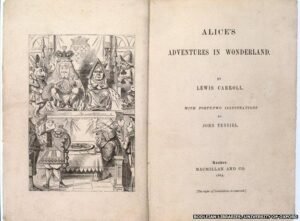
Let’s talk about one of literature’s most iconic weirdos: the Cheshire Cat. This grinning, disappearing, philosophizing feline made its debut in Lewis Carroll’s “Alice’s Adventures in Wonderland” in 1865 and immediately became the character everyone remembers. You know the one—appears out of nowhere, says something cryptic that makes you question reality, then vanishes except for that unnerving smile.
The Cheshire Cat is peak Carroll: whimsical, unsettling, and way deeper than it has any right to be. It shows up when Alice is lost, offers “helpful” advice that’s actually super confusing, and casually mentions that everyone in Wonderland is mad (including Alice). Thanks, cat. Really comforting.
But here’s where it gets interesting: this character’s name isn’t random. The Cheshire Cat comes from, well, Cheshire—a real county in England. And Cheshire is famous for something very specific: cheese. Really good cheese that’s been around since medieval times.
Now, you might be thinking, “Okay, so the cat is named after a place known for cheese. So what?” But hold onto your tea cups, because the connection between the Cheshire Cat and Cheshire cheese is way weirder and more delightful than you’d expect.
Folklore suggests that the cat’s famous grin might actually be inspired by cheese. Yes, you read that right. Cheese. Specifically, the way Cheshire cheese was traditionally molded and decorated. We’re about to dive into one of the strangest origin stories in literary history, where British cheese-making, regional folklore, and a mathematician’s imagination collide to create one of fiction’s most memorable characters.
Spoiler alert: this theory is equal parts charming, bonkers, and oddly plausible. Welcome to Victorian England, where apparently even dairy products can inspire literary icons.
Cheshire Cheese: The Grinning Dairy Product
Before we connect the dots to our favorite disappearing cat, we need to talk about Cheshire cheese itself. This isn’t just any cheese—it’s one of England’s oldest and most beloved varieties, with a history dating back to at least the 16th century. When Carroll was writing in the 1860s, Cheshire cheese was basically the LeBron James of British dairy.
The cheese itself is pretty distinctive. It’s got a crumbly texture (not ideal for sandwiches, excellent for eating in chunks), and a flavor that ranges from mild and creamy to sharp and tangy, depending on how long it’s aged. During the Victorian era, you couldn’t throw a scone without hitting someone who had strong opinions about their preferred Cheshire cheese maturation period.
But here’s where it gets fun: Cheshire cheese wasn’t just sold in boring blocks. Oh no. Cheese-makers, being the delightful weirdos they were, would mold their cheese into shapes. And one of the most popular shapes? A grinning cat.
Yes, really. There’s historical evidence that Cheshire cheese was sometimes molded to look like a cat’s face, complete with a big smile. Picture it: you walk into a Victorian cheese shop, and there on the counter is a round wheel of cheese grinning at you. Because apparently, the Victorians understood that food should be entertaining.
These cat-shaped cheeses weren’t just novelties—they were tied to local folklore and regional pride. The cheese represented Cheshire itself, and the grin became a symbol of the county. Markets would display these grinning cheese cats, and they became so iconic that the phrase “grinning like a Cheshire cat” was already in use before Carroll ever picked up a pen.
The cultural significance went beyond just quirky packaging. Cheshire cheese was served at fancy gatherings, given as gifts, and generally treated as a source of local pride. Stories and jokes about the grinning cheese circulated throughout the region, creating a whole folklore around dairy products (as one does).
So when Carroll sat down to write about a mysterious cat with an unforgettable grin, was he thinking about the cheese? Almost certainly. The man lived in Oxford, not far from Cheshire, and would have been familiar with both the cheese and the folklore surrounding it.
The legacy of Cheshire cheese isn’t just culinary—it’s cultural. This cheese didn’t just taste good; it inspired art, folklore, and apparently, one of literature’s most enigmatic characters. Not bad for a dairy product.
From Dairy Aisle to Literary Legend
The evolution of the Cheshire Cat from cheese mold to cultural icon is honestly one of the weirder journeys in literary history. But it makes sense when you consider how Carroll’s mind worked—the man saw connections between math, logic, language, and apparently, dairy products.
The term “Cheshire Cat” likely started as a regional reference to those grinning cheese molds. Over time, the phrase “grin like a Cheshire cat” became common enough that Carroll could use it knowing his readers would get the reference. But being Carroll, he couldn’t just reference it—he had to transform it into something much stranger and more profound.
In “Alice’s Adventures in Wonderland,” the Cheshire Cat isn’t just a grinning face on cheese. It’s a philosophical guide (sort of), a reality-bending presence, and a character that embodies some of the book’s deepest themes. The cat can appear and disappear at will, often leaving just its smile behind—which is both creepy and a brilliant metaphor for how we perceive reality.
Think about it: a smile without a cat is basically the essence of something without the substance. It’s appearance without reality, form without being. Carroll took a playful image of a cheese mold and turned it into an exploration of identity, existence, and the nature of perception. Because of course he did.
The cat’s ability to vanish bit by bit—starting with the tail, ending with the grin—plays with Victorian ideas about what’s real and what’s not. Can you have a grin without a face? Can you have an identity without a body? These are the kind of questions that kept Victorian philosophers up at night, and Carroll just casually dropped them into a conversation between a girl and a cat.
The Cheshire Cat also fits perfectly into the folklore tradition of trickster animals—creatures that challenge protagonists, subvert expectations, and generally make life complicated while offering weird wisdom. The cat doesn’t give Alice straight answers; it gives her riddles and observations that force her to think differently about her situation.
“We’re all mad here” isn’t just a throwaway line—it’s the cat pointing out that normalcy is relative, that what seems crazy in one context makes perfect sense in another. This kind of philosophical playfulness aligns with Carroll’s broader project of questioning social norms and conventional thinking.
But here’s what makes the cheese connection so delightful: it grounds this cosmic, philosophical character in something utterly mundane and local. The Cheshire Cat exists in this space between the everyday (cheese) and the transcendent (existential philosophy). It’s approachable and mysterious, familiar and alien, comforting and unsettling—all at once.
Carroll transformed regional folklore about grinning cheese into a character that would outlive him by centuries, spawn countless adaptations, and become a symbol recognized worldwide. That’s some serious alchemy—turning dairy into literary gold.
The Cat That Keeps Evolving
Fast-forward to the modern era, and the Cheshire Cat is everywhere. This character has had more comebacks than most rock bands, and each generation reimagines it for their own context while keeping that essential grinning mystery intact.
Disney’s 1951 animated version gave us a purple-and-pink striped cat with a voice that’s simultaneously soothing and unnerving. That grin became THE definitive grin—floating in the darkness, all teeth and mischief. Kids who grew up with this version probably had some interesting dreams.
Then Tim Burton got his hands on the character in 2010, and we got a Cheshire Cat that’s part wise guide, part creepy oracle, with a grin that seems to contain too many teeth (in the best possible way). Burton understood that the cat should be helpful and threatening simultaneously—friendly but fundamentally unknowable.
The character shows up in video games, on merchandise, in memes, and as tattoos on people who want to signal that they’re whimsical but also potentially unhinged. The floating grin has become shorthand for mischief, mystery, and that particular brand of wisdom that comes from not taking reality too seriously.
What’s fascinating is how adaptable the character is. You can make the Cheshire Cat cute or sinister, helpful or obstructive, comforting or terrifying—and all of these interpretations work because Carroll built in that flexibility. The cat is whatever it needs to be, which is very on-brand for a character whose whole deal is appearing and disappearing.
Modern adaptations often play up different aspects. Some emphasize the philosophy (“we’re all mad here” has become a rallying cry for embracing your weird side). Others focus on the visual spectacle of the grin. Some explore the cat as a guide through madness, others as an embodiment of chaos itself.
But here’s where the cheese origin story adds something special: it reminds us that even the most mystical, philosophical, reality-bending characters can have humble, hilarious origins. The Cheshire Cat, symbol of existential mystery and cosmic playfulness, might have started as someone looking at a wheel of cheese and thinking, “You know what? That looks like a grinning cat.”
There’s something perfectly Carroll about that. He took the mundane—a dairy product—and transformed it through imagination into something that makes us question reality itself. It’s the same process he applied to everything: tea parties, playing cards, chess games, mathematical concepts. He saw the extraordinary in the ordinary.
The cheese connection also emphasizes the playfulness inherent in Carroll’s work. Yes, there’s deep philosophy and social commentary, but it’s all wrapped in whimsy. The Cheshire Cat isn’t just making profound observations about madness and reality—it’s also kind of ridiculous. It’s a grinning cat that can vanish. That’s objectively silly, and that silliness is essential.
Modern merchandise keeps this alive. You can buy Cheshire Cat plushies, mugs, t-shirts, phone cases, and yes, even cheese boards (the irony is not lost). The character has become a symbol of creativity, individuality, and the joy of not taking things too seriously—which would probably amuse Carroll to no end.
Why This Matters (Besides Being Delightfully Weird)
So why should we care that the Cheshire Cat might have been inspired by cheese? Because it’s a perfect example of how creativity works.
Carroll didn’t need some profound mystical experience to create an iconic character. He looked at regional folklore, a grinning cheese mold, and some philosophical questions about reality, and his brain said, “Yes, I can work with this.” He took something local and specific—Cheshire cheese—and transformed it into something universal and timeless.
This is what great writers do. They notice connections others miss. They see a cheese mold and think about identity and existence. They take everyday objects and imbue them with meaning, mystery, and magic.
The Cheshire Cat reminds us that inspiration is everywhere. It’s in food, folklore, local traditions, and random observations. It’s in the way cheese-makers decided to be whimsical with their molds. It’s in phrases people use without thinking about where they came from.
Carroll was a collector of interesting things—mathematical puzzles, linguistic quirks, social observations, and yes, regional cheese folklore. He threw them all into his creative cauldron and stirred until something magical emerged. The fact that we’re still talking about the result 150+ years later suggests he did something right.
The cheese origin also democratizes creativity. You don’t need access to exotic experiences or profound revelations to create something memorable. You just need to pay attention to the world around you, make unexpected connections, and have the courage to pursue weird ideas.
Imagine pitching this: “So, I’m going to create a character based on the way we mold cheese in Cheshire, but I’m going to make it philosophical and slightly terrifying.” Most people would back away slowly. Carroll wrote it down and created an icon.
The Grin That Conquered the World
Whether or not the Cheshire Cat was directly inspired by cheese molds (and the evidence is pretty compelling), the connection enriches our understanding of both the character and Carroll’s creative process.
It reminds us that literature doesn’t exist in a vacuum. Carroll was influenced by his environment, his culture, his region’s folklore, and yes, possibly its cheese. The best fiction is rooted in reality, even when it’s depicting impossible things.
The Cheshire Cat started as regional folklore, possibly connected to cheese, and evolved into a global symbol of mystery, wisdom, and delightful madness. That’s quite a journey for a grin.
And here’s the beautiful thing: knowing the cheese connection doesn’t diminish the character—it enhances it. The Cheshire Cat is simultaneously a philosophical guide, a literary icon, a symbol of creativity, and a really good cheese pun. It contains multitudes, which is exactly what you’d expect from a character that can appear and disappear at will.
So the next time you see that iconic grin—in a book, movie, on a t-shirt, or in your nightmares—remember: you might be looking at the legacy of creative Victorian cheese-makers who decided to have some fun with their dairy products.
Carroll saw that playfulness and thought, “I can use this.” And he did. He transformed regional cheese folklore into a character that would transcend its origins and become a permanent part of global culture.
Not bad for a cat that might have started as a wheel of cheese.
We’re all mad here, indeed—mad enough to find profound meaning in dairy products and turn them into philosophical guides. And honestly? That’s exactly the kind of madness the world needs more of.
Pass the cheese, and keep grinning.