Meet Lewis Carroll: Math Nerd Turned Literary Legend
Let’s get one thing straight: Lewis Carroll (real name: Charles Lutwidge Dodgson) was not your average children’s book author. Born in 1832 in Cheshire, England, this guy was a mathematician, logician, and professor at Oxford who just happened to write some of the trippiest kids’ books in history. Talk about a side hustle.
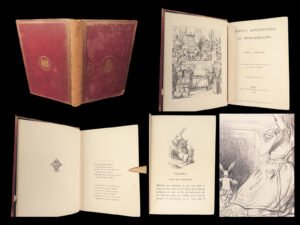
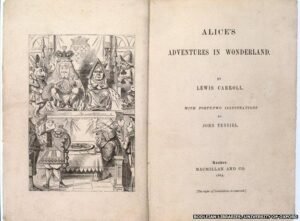
Carroll spent his days teaching math to presumably confused college students, but his real passion was language, logic, and messing with people’s heads in the most delightful way possible. When “Alice’s Adventures in Wonderland” dropped in 1865, it wasn’t just another fairy tale—it was a brain-bending journey that made readers go, “Wait, what just happened?” And then they’d read it again. And again.
The story of Alice falling down that rabbit hole into a world of talking cats, mad tea parties, and tyrannical queens seemed like pure whimsy. But Carroll, being Carroll, couldn’t just write a simple story. Oh no. He had to pack it full of mathematical puzzles, wordplay, logic games, and hidden meanings that scholars are still arguing about today.
His sequel, “Through the Looking-Glass” (1871), doubled down on the mind games, using chess, mirror imagery, and even more sophisticated wordplay. The man was essentially creating literary escape rooms before escape rooms were a thing.
Here’s what makes Carroll fascinating: his books work on multiple levels. Kids love the weird characters and silly situations. Adults appreciate the satire and social commentary. Mathematicians geek out over the logic puzzles. And literary nerds? They’re still finding hidden codes and Easter eggs over 150 years later.
So buckle up, because we’re about to go down the rabbit hole and discover the secret messages Carroll hid in Wonderland. Spoiler alert: this mathematician was way sneakier than you thought.
Literary Easter Eggs: Like a Scavenger Hunt, But Fancier
Okay, so what exactly are “literary Easter eggs”? Think of them as the original hidden content—those secret messages, inside jokes, and clever references that authors slip into their books like little gifts for attentive readers. They’re the literary equivalent of finding a $20 bill in your winter coat pocket: surprising, delightful, and proof that someone was thinking ahead.
These hidden gems serve multiple purposes. Sometimes they’re commentary on society. Sometimes they’re personal jokes. Sometimes they’re just the author showing off (looking at you, Carroll). But they all have one thing in common: they reward readers who pay attention.
You know how modern movies have post-credit scenes and hidden references that make fans lose their minds? Carroll was doing that in the 1860s. He was the original Marvel Cinematic Universe, except with more riddles and fewer explosions.
In video games, Easter eggs might be secret levels or hidden characters. In movies, they’re background details or quick references that make you go “Wait, was that—?” and rewind three times. In Carroll’s books, they’re everywhere: in the structure of sentences, in mathematical puzzles disguised as nonsense, in acrostics that spell out hidden words, and in characters who are basically walking metaphors.
The beautiful thing about literary Easter eggs is that they create this amazing feedback loop. The more you find, the more you want to look for. Suddenly, you’re not just reading—you’re investigating, analyzing, connecting dots. You become a detective, and the book becomes a mystery.
Carroll knew exactly what he was doing. He was a mathematician who understood patterns, a logician who loved puzzles, and a writer who couldn’t resist a good secret. He wanted readers to work for their “aha!” moments, and honestly? That’s what makes his books so addictive.
So next time someone tells you they’re “just children’s books,” you can smile knowingly and think about all the layers they’re missing. Because Carroll’s Easter eggs aren’t just hidden—they’re buried, waiting for someone clever enough to dig them up.
Math Problems Disguised as Tea Parties
Here’s a fun fact: Carroll didn’t stop being a mathematician when he picked up a pen to write fiction. Instead, he thought, “You know what kids’ books need? More math.” And somehow, it worked.
Take the Mad Hatter’s tea party, for instance. On the surface, it’s just chaos—three weirdos having an eternal tea party because they’re stuck at 6 o’clock forever. But if you’re Carroll, you’re thinking about permutations and combinations. Who sits where? How does the arrangement affect the conversation? It’s a seating chart problem disguised as whimsy.
The Hatter, the March Hare, and the Dormouse keep moving around the table, rotating positions. Sound familiar? It should—it’s basically a logic puzzle about circular arrangements. Carroll took a mathematical concept and made it into a scene so memorable that “mad as a hatter” became a permanent part of our language.
Then there’s “The Hunting of the Snark,” Carroll’s epic poem that’s essentially a word problem on steroids. The crew goes on a quest using maps, calculations, and probability—except everything is nonsensical and the Snark might not even exist. It’s like if your math teacher gave you a problem where you had to calculate the airspeed velocity of an unladen swallow, except Carroll did it first and made it weirder.
Carroll’s chess and card game references aren’t random either. “Through the Looking-Glass” is literally structured as a chess game, with Alice as a pawn trying to reach the eighth square to become a queen. Every move matters. Every character has a role. If you map it out (and people have), the entire book follows chess logic—mostly. Carroll cheats a little, because of course he does.
The genius here is that you don’t need to solve the math to enjoy the story. Kids read it and think it’s fun. Adults read it and go, “Wait, is this calculus?” Mathematicians read it and write academic papers. Everyone wins.
Carroll understood something important: math isn’t just numbers—it’s patterns, logic, and relationships. And those things make for great storytelling when you disguise them as talking animals and magical transformations.
So the next time you read about Alice changing sizes or the Cheshire Cat appearing and disappearing in pieces, remember: there’s probably a mathematical principle lurking underneath. Carroll couldn’t help himself. The man was a math teacher to his core, and apparently, nobody escapes math class—not even in Wonderland.
Acrostics: Secret Messages Hiding in Plain Sight
Want to feel like a literary detective? Start looking for acrostics in Carroll’s work. These are the original hidden messages—words or phrases spelled out by the first letter of each line. It’s like Carroll was writing in code, except he was polite enough to give you a map.
An acrostic is simple in theory: read the first letter of each line vertically, and boom—secret message. But Carroll, being Carroll, used them in ways that were anything but simple. He’d embed character names, themes, and even personal dedications into his poems and stories.
The most famous example? The poem at the beginning of “Alice’s Adventures in Wonderland” spells out ALICE PLEASANCE LIDDELL—the full name of the real Alice who inspired the story. It’s like Carroll left his signature in the code. Imagine dedicating an entire book to someone and then also hiding their name in a poem for them to find. That’s next-level.
But Carroll didn’t stop there. Throughout his works, he scattered acrostics that reveal character traits, highlight themes, or just mess with readers who think they’ve figured him out. Sometimes the acrostics are obvious once you know to look for them. Other times, scholars are still debating whether certain letter combinations are intentional or coincidental.
Here’s why acrostics are brilliant: they add a layer of interaction. You’re not passively reading anymore—you’re hunting. And when you find one? That little dopamine hit of discovery makes you want to find more. It’s literary gamification before anyone knew what that meant.
For kids, acrostics are like a puzzle that makes them feel smart when they crack the code. For adults, they’re evidence of Carroll’s meticulous craftsmanship. The man was writing stories and embedding secret messages and making it all rhyme and make sense (well, Carroll-sense). That’s multitasking on a whole different level.
The beauty of acrostics in children’s literature is that they encourage close reading. Kids start paying attention to structure, pattern, and detail. They learn that books can have secrets, and that reading carefully pays off. Carroll was basically training a generation of analytical readers while entertaining them.
So grab a copy of Carroll’s work and start reading vertically. You might find a name. You might find a theme. You might find proof that Carroll was showing off. Either way, you’ll never read those opening letters the same way again.
Coded Messages: When Nonsense Makes Perfect Sense
Here’s where Carroll really shows his cards: those seemingly random, nonsensical conversations in Wonderland? Many of them are actually coded commentary on Victorian society, philosophy, and human nature. The jokes are on multiple levels, and the deeper you dig, the more you find.
Take the Mad Hatter’s tea party again (seriously, this scene is a goldmine). On the surface: absurd. One level down: a critique of rigid social conventions and the Victorian obsession with tea time. Another level down: commentary on the passage of time and how society traps people in meaningless routines. Keep going and you’ll find mathematical concepts, linguistic puzzles, and probably Carroll’s opinions on his colleagues.
The Queen of Hearts screaming “Off with their heads!” seems like random tyranny. But Carroll was surrounded by arbitrary authority figures at Oxford and in Victorian society generally. The Queen is what happens when you take institutional power and remove any pretense of logic or fairness. She’s not just a character—she’s a roast.
Then there’s the Cheshire Cat, who might be Carroll’s most philosophical creation. When the Cat tells Alice “we’re all mad here,” he’s not just stating facts about Wonderland—he’s commenting on sanity, society, and how subjective these concepts really are. The Cat’s ability to appear and disappear, leaving only his grin? That’s Carroll playing with concepts of existence and identity. Heavy stuff for a kids’ book about a talking cat.
“Through the Looking-Glass” takes the coding even further with its mirror imagery and chess motifs. The entire book is about duality, reflection, and seeing things from different perspectives. When Alice walks through the mirror into a reversed world, Carroll is asking: what changes when you flip your perspective? What stays the same? Are things more logical or less?
The chess game structure isn’t just cute—it’s intentional commentary on how people are pieces moved by larger forces, playing roles in games they don’t fully understand. Deep, right? And this is supposedly a children’s book.
Here’s the thing about Carroll’s coded messages: they’re layered like an onion, except instead of crying, you keep saying “ohhh, that’s clever.” You can read Wonderland as pure entertainment and have a great time. Or you can read it as social satire. Or philosophical inquiry. Or mathematical exploration. Or linguistic experimentation.
All of these readings are valid because Carroll put them all there. The man was writing for multiple audiences simultaneously—kids who wanted adventure, adults who appreciated satire, academics who loved puzzles, and future scholars who’d spend careers analyzing his work.
The best part? You don’t need a PhD to find these codes. You just need curiosity and willingness to ask “but what does this mean?” Carroll rewards that question every single time.
Meta-Jokes: When the Book Talks About Being a Book
Carroll was doing meta-humor before “meta” was even a thing. His books are full of moments where characters seem aware they’re in a story, where the narrative winks at you, and where the whole structure of storytelling gets gently mocked. It’s like Carroll couldn’t resist breaking the fourth wall before anyone knew walls had numbers.
The Cheshire Cat is basically the king of meta-commentary. When he tells Alice that Wonderland is mad and everyone in it is mad, including her, he’s not just describing the fictional world—he’s commenting on the absurdity of the story itself. He knows he’s in a weird book, and he’s okay with it.
Carroll’s meta-jokes work on multiple levels. There are moments where characters discuss the logic of the story they’re in, question their own existence, or comment on narrative conventions. It’s like Carroll is having a conversation with the reader over the characters’ heads: “Yes, this is silly. We both know this is silly. Let’s enjoy the silly together.”
One of the best examples is how Alice constantly tries to apply logic and rules to Wonderland, only to have it fail spectacularly every time. She’s essentially trying to make the story follow conventional narrative rules, and Carroll keeps reminding her (and us) that those rules don’t apply here. It’s commentary on storytelling itself—who says stories have to make sense?
The trial scene in “Alice’s Adventures in Wonderland” is Carroll’s masterclass in meta-humor. It’s a trial where the rules of justice are absurd, evidence is nonsensical, and the outcome is predetermined. But it’s also Carroll satirizing narrative structure—isn’t every trial scene in literature kind of manipulated by the author? The jury might as well be made of animals because they’re all just doing what the story needs them to do.
These self-aware moments transform reading from passive to active. When the text acknowledges its own artificiality, it invites you to think about how stories work, why we believe in them, and what makes fiction compelling even when we know it’s not real.
Carroll’s meta-jokes also create this delightful complicity between author and reader. It’s like he’s saying, “Look, we both know this is make-believe. But isn’t it fun? Aren’t these puzzles interesting? Don’t you want to see what happens next?” And the answer is always yes, because Carroll made the game so entertaining that we don’t care about the artifice.
Modern authors who break the fourth wall or create self-referential narratives owe a debt to Carroll. He proved that you can acknowledge a story is a story and still make people care about it. Maybe even make them care more because they’re in on the joke.
So when you’re reading Carroll and something feels a little too aware, a little too knowing—that’s intentional. He’s winking at you from 150 years in the past, inviting you to appreciate the craft behind the chaos.
Carroll’s Cultural Impact: The Original Easter Egg Hunter
Let’s talk about Carroll’s legacy, because it’s huge. This Victorian mathematician didn’t just write popular books—he fundamentally changed how authors hide meaning in their work. Every modern author who plants Easter eggs, every filmmaker who adds hidden references, every game designer who creates secret content? They’re all walking in Carroll’s footsteps.
Carroll pioneered the art of multilayered storytelling. His books work as straightforward adventures, but they’re also puzzles, satires, philosophical treatises, and linguistic experiments all at once. That approach to narrative—creating content that rewards repeat engagement and close analysis—is everywhere now.
Look at contemporary authors like Neil Gaiman, who fills his books with mythology references, hidden connections between stories, and nested meanings. Or Haruki Murakami, whose surreal narratives echo Carroll’s dream-logic and symbolic complexity. Even J.K. Rowling’s Harry Potter series, with its prophecies, hidden identities, and foreshadowing, follows Carroll’s template of rewarding attentive readers.
The modern concept of “Easter eggs” in media—those hidden references and inside jokes in movies, TV shows, and games—that’s pure Carroll. He proved that audiences love feeling clever, that discovery enhances enjoyment, and that hidden content creates community. Fans gather to share findings, debate interpretations, and dig deeper together.
Marvel movies post-credits scenes? Carroll did it first (just with more wordplay and fewer superheroes). Video game secret levels? Same energy as Carroll’s hidden acrostics. TV shows with mythology that rewards long-term viewers? That’s just Carroll’s interconnected puzzles in a different medium.
But Carroll’s influence goes beyond just hiding stuff. He showed that you could write for multiple audiences simultaneously without talking down to anyone. Kids get adventure. Teens get satire. Adults get social commentary. Academics get lifetime careers. Everybody wins.
His approach to language—using puns, portmanteaus, and nonsense words that somehow make sense—influenced everyone from Dr. Seuss to Roald Dahl to Lemony Snicket. His willingness to play with narrative structure inspired postmodern literature. His mathematical puzzles paved the way for books like “The Da Vinci Code” that make readers work for answers.
Modern fan culture, with its deep dives into canon, its endless theories, and its collaborative analysis? Carroll would have loved the internet. He created works that practically demand community discussion, interpretation, and debate. He gave readers permission to dig deep, find patterns, and create meaning.
Publishers now market books as having “hidden depths” or “secrets to discover” specifically because Carroll proved that readers love that experience. The hunt for meaning, the joy of discovery, the satisfaction of solving a puzzle—that’s all Carroll’s legacy.
So the next time you see someone overanalyzing a Marvel movie timeline or debating the meaning of an ambiguous book ending, remember: they’re continuing a tradition that started with a Victorian math professor who couldn’t resist hiding codes in a kids’ book about a girl and a rabbit.
The Joy of Discovery: Why Finding Codes Feels So Good
Here’s the thing about Carroll’s hidden codes: finding them feels amazing. There’s this pure rush of accomplishment when you spot an acrostic, solve a puzzle, or suddenly understand a reference you missed the first three times. It’s like Carroll left treasure for you specifically, and you finally found it.
This isn’t just fun—it’s transformative. Reading becomes active investigation. You stop being a passive consumer and become a detective, a puzzle-solver, a code-breaker. Suddenly, every weird phrase, every odd character, every seemingly random detail could be significant. Your brain lights up with possibilities.
The beauty of Carroll’s approach is that the codes exist at different levels of difficulty. Some Easter eggs are easy to find—the acrostic spelling Alice’s name is right there if you know to look. Others require deep analysis, historical context, or mathematical knowledge. There’s always another layer to discover, always another puzzle waiting.
This creates what modern game designers call “flow”—that perfect state where challenge meets skill, where you’re engaged but not frustrated, discovering but not lost. Carroll designed his books to keep readers in that sweet spot, always finding something new, always motivated to look deeper.
The social aspect is huge too. Finding a code isn’t just personal satisfaction—it’s something to share. “Did you notice that…?” becomes a conversation starter. Fan communities form around shared discoveries. Scholars publish papers about new interpretations. Everyone’s contributing to a collective understanding that’s been building for over 150 years.
And here’s what makes it really special: Carroll’s codes don’t have a single “correct” interpretation. The mathematical puzzles have answers, sure, but the social commentary? The philosophical questions? The symbolic meanings? Those are open to interpretation. Your reading is valid. Your discoveries are real. Carroll created a playground where everyone can find something different.
This is why English teachers love assigning Carroll. Not because they want to torture students with analysis (okay, maybe a little), but because his works reward close reading in such obvious, satisfying ways. Finding a code in Carroll isn’t like fishing for themes in books where maybe the author didn’t intend anything—Carroll definitely intended it. The man was meticulous.
For kids, discovering these codes is empowering. It proves that books can be interactive, that stories can have secrets, that paying attention matters. It builds analytical skills while feeling like a game. Carroll was essentially creating educational content that didn’t feel educational—it just felt fun.
For adults, the joy is different but equally real. It’s appreciating craftsmanship, recognizing complexity, and experiencing the satisfaction of intellectual engagement. It’s knowing that something that seemed simple at first is actually intricate and deliberate. It’s respecting Carroll’s skill while enjoying his sense of play.
The best part? You can always go back. Every reread of Carroll is potentially a new discovery. Something you missed before suddenly becomes obvious. A reference you didn’t understand now makes sense. The books grow with you, revealing new layers as you bring more knowledge and experience to them.
Start Your Own Hunt
So now you know: Carroll’s Wonderland isn’t just a rabbit hole—it’s a puzzle box disguised as a rabbit hole. Every page could hide an acrostic. Every conversation could conceal commentary. Every character might represent something deeper.
The question is: are you ready to look?
Grab “Alice’s Adventures in Wonderland” or “Through the Looking-Glass” and start reading like a detective. Look at first letters. Think about mathematical concepts. Question why characters say what they say. Consider historical context. Every weird detail could be significant.
And when you find something—share it. Join the community of readers who’ve been hunting Carroll’s codes for over a century. Add your interpretation to the collective understanding. Argue with scholars. Start debates.
Because that’s what Carroll wanted. He didn’t hide codes to keep them secret—he hid them to be found. Every Easter egg is an invitation, every puzzle is a challenge, every hidden message is Carroll saying, “I bet you’ll enjoy figuring this out.”
He was right. We do.
Welcome to Wonderland. The real adventure is just beginning.